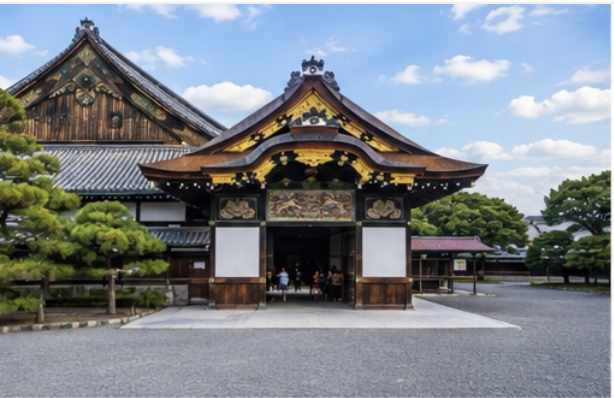
Nijō Castle is one of Japan’s most significant historical landmarks, located in the heart of Kyoto and renowned for its connection to the powerful Tokugawa shogunate. Built in 1603 by Tokugawa Ieyasu, the first shogun of the Edo period, the castle served as both a residence and a symbol of shogunal authority.
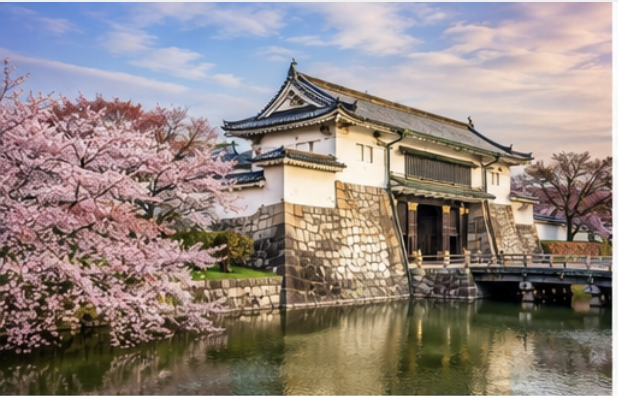
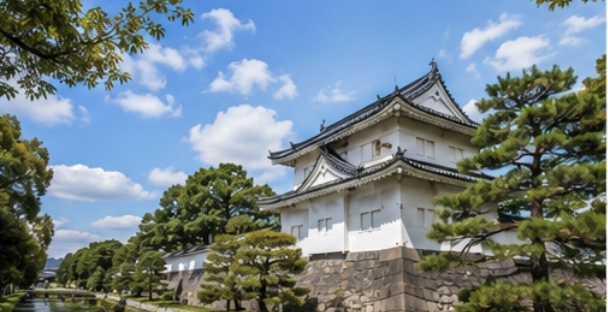
Unlike Japan’s towering hilltop fortresses, Nijō Castle is celebrated for its exquisite palace architecture, beautifully landscaped gardens, and richly decorated interiors featuring intricate wood carvings, gold-leaf paintings, and sliding doors adorned with masterpieces by artists of the Kano school.
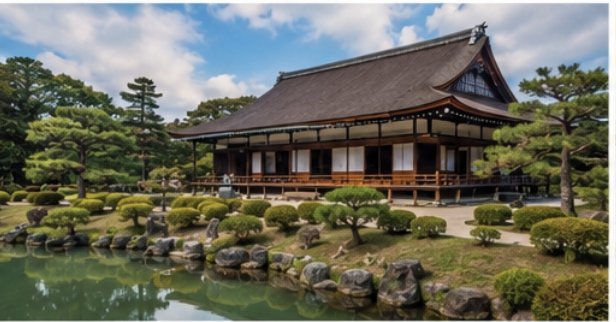
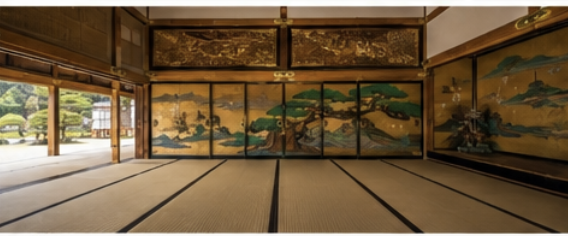
The castle is perhaps best known for its unique “nightingale floors,” specially designed wooden corridors that chirp when walked upon, acting as an early security system against intruders. Nijō Castle also played a pivotal role in Japanese history, as it was here in 1867 that the last shogun, Tokugawa Yoshinobu, returned political power to the Emperor, marking the end of the Edo period and the beginning of modern Japan. Today, as a UNESCO World Heritage Site, Nijō Castle stands as a remarkable testament to Japan’s feudal legacy, artistic refinement, and political transformation.